
The first step in choosing the right daycare is understanding your child’s unique needs. Consider your child’s age, personality, and any special requirements they might have.
For instance, some children may need more personalized attention or specific programs to help with social skills development.
Observe how your child interacts with peers and adults to determine the type of environment in which they thrive. If your child is shy or has separation anxiety, a smaller daycare with a homelike feel might be preferable. There are also daycares that specialize in particular educational approaches, such as Montessori or Waldorf, which might align with your child’s learning style.
Understanding your child’s routine and temperament is crucial in finding a daycare that complements their lifestyle. You may need to make a list of factors such as dietary restrictions, nap schedules, and preferred play activities. This list will help you communicate effectively with potential daycare providers and choose one that can cater to your child’s specific requirements.
Evaluating Daycare Options
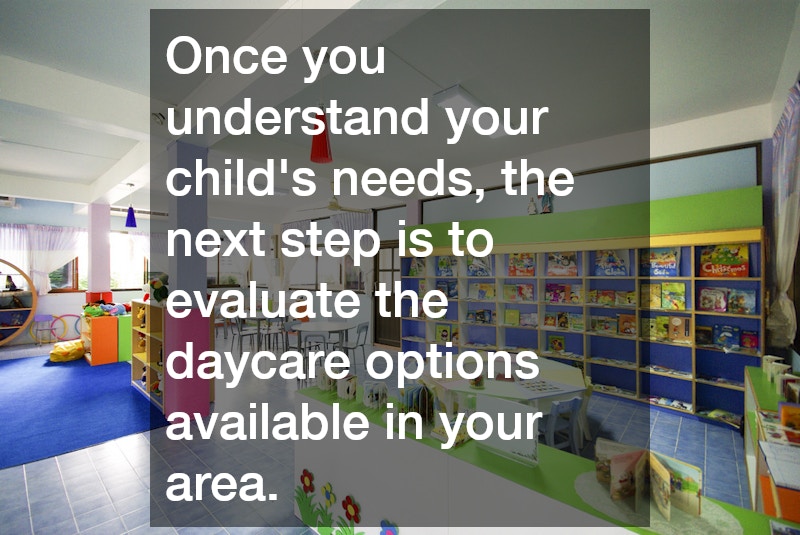
Once you understand your child’s needs, the next step is to evaluate the daycare options available in your area. Start by asking for recommendations from friends, family, and even online community groups. Gather a list of potential daycares and research each one, looking for reviews and testimonials from other parents.
Visiting the daycare centers on your list is essential for gauging the environment and facilities. When touring, take note of the cleanliness, safety arrangements, and overall ambiance of the center. Observe the staff’s interactions with the children, as this can be indicative of the level of care your child will receive.
In addition to physical visits, inquire about the center’s accreditation and licensing. Accredited daycares must adhere to higher standards and are often inspected more regularly. Licensing ensures that the daycare meets the basic requirements mandated by local or state authorities, giving you peace of mind about your choice.
Assessing Safety and Security Measures
Safety and security are top priorities when selecting a daycare for your child. Check the daycare’s policies on pick-ups, drop-offs, and general access to the facility. Every reputable daycare will have stringent security measures to ensure the safety of all children in its care.
Ask about the teacher-to-child ratio, as this affects not only safety but also the quality of attention each child receives. The facility should have clear emergency procedures and trained staff capable of handling various situations confidently. Ensure that all safety equipment, such as fire extinguishers and first aid kits, is up to date and accessible.
Additionally, look into their background check procedures for staff members. Knowing that every staff member has passed a comprehensive background check ensures peace of mind regarding your child’s caregivers. A transparent approach to safety policies reflects a daycare’s commitment to providing a secure environment for children.
Considering the Curriculum and Activities
Learning and development are crucial aspects of any daycare program. Evaluate the curriculum offered by the daycare to ensure it aligns with your child’s developmental stage and your educational goals. A good daycare provides a balanced mix of play, education, and rest.
Ask about the types of activities included in the daily schedule. These activities should promote the growth of cognitive, social, and physical skills. Whether it’s art projects, story times, or outdoor play, the activities should be designed to engage and stimulate young minds.
Quality daycare centers will offer a flexible curriculum that addresses various aspects of early childhood development. They should have structured programs that cater to different learning paces and styles. A rich curriculum indicates that the daycare is dedicated to nurturing each child’s potential.
The cost of daycare is a significant factor in the decision-making process. While it’s important to stay within budget, it’s crucial not to sacrifice quality for cheaper fees. Factors such as teacher qualifications, facility conditions, and child-to-staff ratios should justify any premiums.
Consider what is included in the daycare fees; some centers might offer meals, diapers, or field trips as part of their package. Comparing the overall cost against the amenities and services offered can help determine the best value. Remember that investing in quality daycare is investing in your child’s well-being and development.
It’s also worth exploring any financial assistance or subsidies that may be available in your area. Programs such as state-funded childcare assistance can significantly lower the financial burden. Balancing cost and quality ensures that your child’s educational and emotional needs are met without overextending your financial resources.